
If your house was built before about 1950, there’s a good chance some of its original wiring is still behind the walls. Across the East Bay, from the older neighborhoods of Richmond and El Cerrito to the craftsman bungalows of Berkeley and Oakland, knob-and-tube wiring is still common. In most of these homes, it has run quietly for close to a century. The problem is that it was never designed for the way we use electricity now, and insurance companies are increasingly unwilling to cover it.
This guide covers what knob-and-tube wiring is, how to tell if you have it, why it matters for safety and insurance, and what replacing it typically costs.
What Is Knob-and-Tube Wiring?
Knob-and-tube (often shortened to K&T) was the standard way to wire homes from the late 1800s until roughly the 1940s. Single insulated copper wires run separately through the framing. Porcelain knobs hold the wires off the wood, and porcelain tubes protect them where they pass through studs and joists.
It was a reasonable design for its time, but it has three built-in limits:
- No ground wire. K&T circuits have only a hot and a neutral. That means no true three-prong outlets and less protection against shock.
- Low capacity. It was built for a few light bulbs and a radio, not for microwaves, space heaters, home offices, heat pumps, and EV chargers.
- Aging insulation. The original rubber and cloth insulation gets brittle after decades of heat. It cracks and crumbles, especially where wires have been disturbed.
Signs Your East Bay Home Has Knob-and-Tube Wiring
You often can’t tell from inside a finished room, but these are common clues:
- Porcelain knobs or tubes visible in the attic, basement, or crawl space
- Single wires wrapped in cloth or rubber, running separately instead of bundled in one cable
- Mostly two-prong (ungrounded) outlets throughout the house
- A house built before about 1950 that has never had a documented full rewire
- Lights that flicker or dim when appliances turn on, or breakers and fuses that trip often
- An older fuse box, or a newer panel that is still feeding original branch circuits
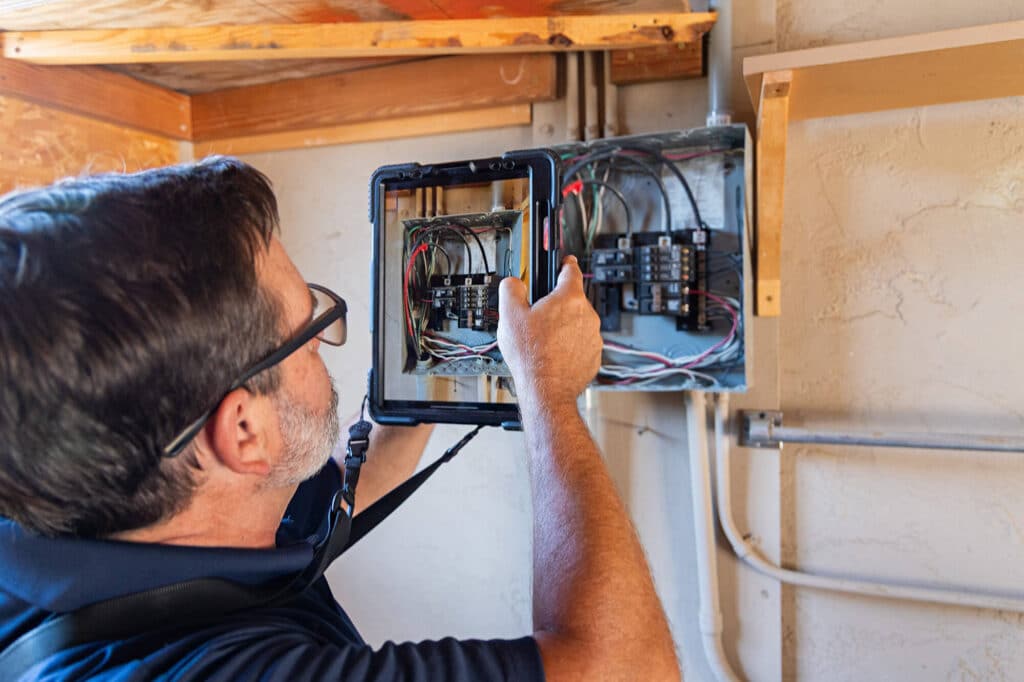
Many homes have a mix: some circuits were updated during a remodel while the original wiring is still live in other rooms. A licensed electrician can inspect the attic, crawl space, and panel to confirm what you have and which circuits are still active.
Is Knob-and-Tube Wiring Dangerous?
Undisturbed K&T in good condition isn’t automatically a fire hazard. Most of the risk comes from age and from the changes made to these systems over the decades:
- Insulation buried around the wires. K&T was designed to shed heat into the open air. When attic or wall insulation is packed around it, the wires can overheat.
- Amateur splices and extensions. Decades of DIY additions often tie new wire into old circuits without proper junction boxes.
- Overloading. Modern appliances draw far more current than these circuits were sized for. Someone may also have replaced a fuse with a larger one so it stops blowing.
- No grounding. This raises the risk of shock, particularly in kitchens, bathrooms, laundry rooms, and outdoors.
If you’re planning to add insulation, remodel a kitchen or bathroom, or add major loads like a heat pump or EV charger, deal with the K&T first.
Knob-and-Tube Wiring and Homeowners Insurance in the Bay Area
For many Bay Area homeowners, insurance is now the main reason to replace K&T. As ABC7 News reported in 2025, insurers are declining or canceling homeowners policies when knob-and-tube wiring is disclosed. Brokers advise owners to replace it before they’re dropped.
It matters when you buy or sell, too. Without insurance a lender won’t approve a mortgage, which can leave buyers with the more expensive California FAIR Plan. If you’re selling, a documented rewire with a finaled permit removes one of the most common inspection-report red flags.
How Much Does Knob-and-Tube Replacement Cost?
Replacing the wiring in a whole house is a major project, and the price depends mostly on the size of the home and how easy it is to reach the wiring. National cost guides put the typical range at:
| Source | Typical whole-home cost | Per square foot |
|---|---|---|
| Angi | $12,000 – $36,600 | $10 – $20 |
| HomeGuide | $12,000 – $35,000 | $8 – $17 |
Based on those per-square-foot figures, a 1,000 sq ft home typically runs about $8,000–$20,000, a 1,500 sq ft home about $12,000–$30,000, and a 2,000 sq ft home about $16,000–$40,000.
Keep in mind that these are national averages. Bay Area labor costs and the challenges of older homes often push East Bay projects toward the higher end. Get a written, itemized estimate based on an in-person inspection of your home.
What Affects the Price
- Square footage and number of circuits. More rooms mean more wire, outlets, switches, and fixtures.
- Access. An open attic and a roomy crawl space make the job much easier. Plaster walls, finished basements, and tight spaces mean more openings.
- Panel capacity. Many K&T homes still have 60- or 100-amp service. Rewiring is often the right time for an electrical panel upgrade. Angi estimates $600–$4,000 for the panel on top of the wiring.
- Permits and inspections. A full rewire requires a city permit, and HomeGuide lists permits at roughly $200–$900.
- Wall repair and painting. Electricians make the openings they need to fish new wire. Patching and painting may or may not be part of the electrical bid, so ask.
- Partial vs. full replacement. Replacing only the remaining live K&T circuits costs less than a full rewire. However, some insurers want written confirmation that no active K&T remains anywhere.
What the Replacement Process Looks Like
- Inspection. An electrician traces which circuits are still K&T and checks the panel, the service, and how easy it is to reach the wiring.
- Written scope and estimate. This covers which circuits get replaced, any panel or service upgrade, and who handles patching.
- Permit. The contractor pulls the electrical permit with your city.
- Rewiring. New grounded cable is run to outlets, switches, and fixtures. The work goes through the attic and crawl space wherever possible to keep wall openings to a minimum. Old K&T is disconnected and abandoned or removed.
- Inspection and sign-off. The city inspector finals the permit. Keep that paperwork for your insurer and for any future sale.
Most families can stay in the home during a rewire, with power off in sections while the work is done.
Can You Just Add Grounded Outlets Instead?
Installing GFCI protection on ungrounded circuits is a code-allowed way to improve shock safety, and it can be a useful short-term step. It doesn’t add a ground, fix brittle insulation, or increase capacity, and it usually won’t satisfy an insurer asking whether K&T is still present. Don’t use three-prong outlets on ungrounded wiring without proper GFCI protection and labeling.
Frequently Asked Questions
Do I have to replace knob-and-tube wiring?
California doesn’t require homeowners to remove existing K&T, but many insurers and lenders effectively do. Remodels that open up walls will also trigger updated wiring in the areas being worked on.
Can I get homeowners insurance with knob-and-tube wiring?
It’s getting harder. Some carriers decline outright, and others require an electrician’s inspection letter or proof of replacement. Talk to your broker and get an inspection before your renewal.
How long does a whole-house rewire take?
It depends on the size of the home, how easy it is to reach the wiring, and the scope of work. Your electrician should give you a schedule along with the estimate.
Should I upgrade my panel at the same time?
Often, yes. Rewiring adds circuits, and if you’re considering an EV charger, a heat pump, or induction cooking, it makes sense to size the service for them now instead of opening walls twice.
Get Your Knob-and-Tube Wiring Inspected
Andrade Link Electric is a licensed electrical contractor (CSLB #1040575). We’re one of the Richmond-based electricians serving homeowners across the East Bay, including Berkeley, Oakland, El Cerrito, and the surrounding cities. We inspect older homes, map out which circuits are still knob-and-tube, and handle whole house rewiring, panel upgrades, permits, and inspections from start to finish.
Call (415) 714-2767 or request a quote to schedule an inspection.

